If the FCC map says internet is available but the provider says no, first confirm the exact mapped location, provider and service technology. When the listing really covers your home and the provider cannot supply the reported service under the FCC’s availability standard, an availability challenge may be appropriate. A missing building or incorrect location point needs a different kind of correction.
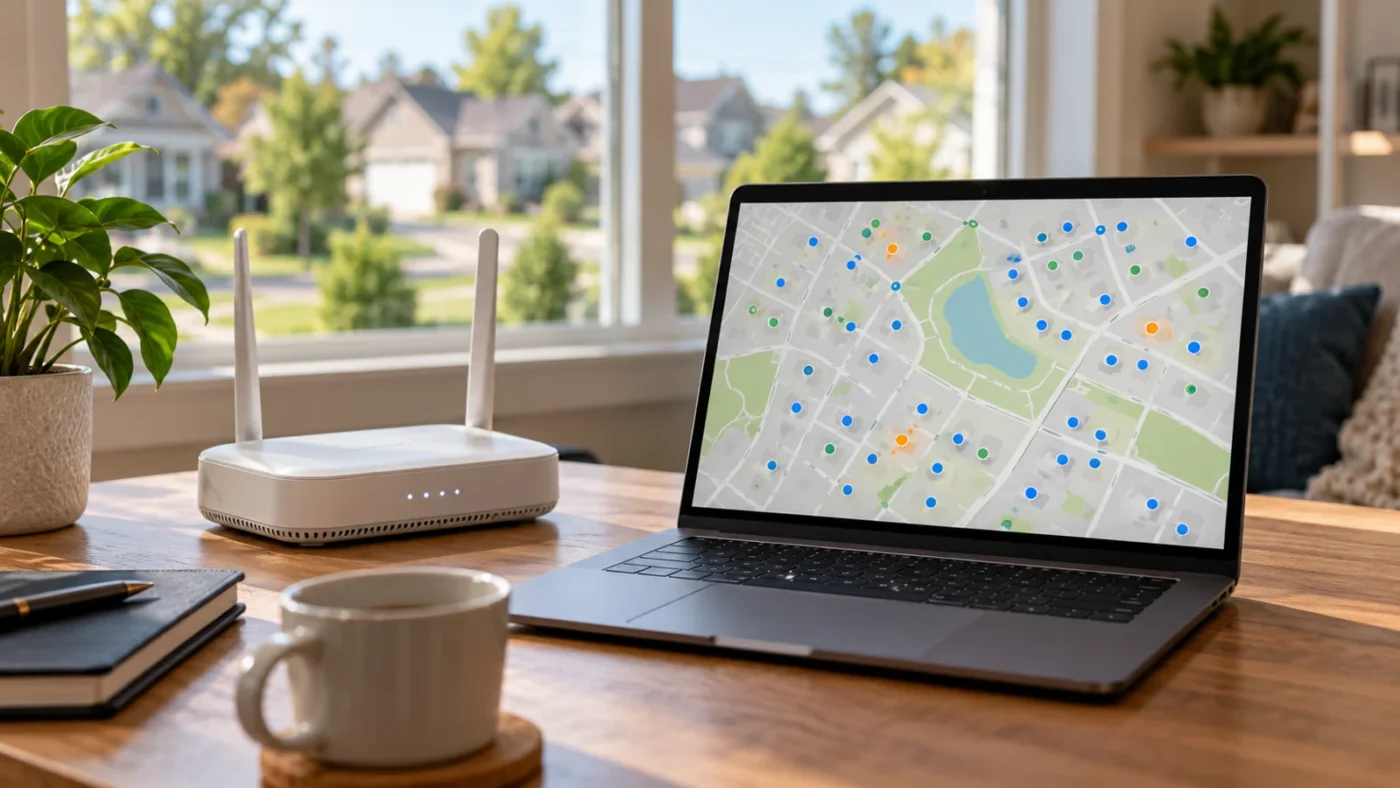
The National Broadband Map uses provider-reported coverage information. It is a starting point for checking service, not an individual installation appointment or a guarantee that an online ordering system will recognize every apartment. Document the disagreement before deciding which part of the map to challenge.
This guide follows the FCC’s availability-challenge instructions. It explains the distinction between availability, performance and location records, and provides a practical evidence checklist. It cannot promise that a challenge will produce a connection, construction funding or an installation by a specific date.
Confirm what the map actually reports
Start with the correct street address and the correct point on the map. Nearby houses can have different reported availability. A marker across the road, a neighboring building or a point representing an entire property may not describe the unit where you want service.
Read the provider name, reported technology and speed. Cable, fiber and fixed wireless are different offerings, even when one company sells more than one. A provider saying it cannot offer fiber does not contradict a map entry reporting only another technology.
Record the map’s data date as well as the day you checked it. A provider’s current ordering response and a historical coverage snapshot are separate observations. Keeping both dates makes the disagreement easier to explain without assuming the two records were created at the same time.
Choose the correct problem category
| Observed problem | What it concerns | Useful next step |
|---|---|---|
| Correct home, listed provider refuses the reported service. | Availability. | Review the availability-challenge route. |
| Home missing or marker placed incorrectly. | Location information. | Review the map’s location-challenge instructions. |
| Service installed but actual speed is poor. | Performance or service quality. | Use provider troubleshooting and the appropriate consumer-complaint route. |
| Service exists but the price is unaffordable. | Affordability. | Compare plans or assistance options; price alone is not an availability error. |
This distinction matters because strong evidence for one issue may be weak evidence for another. A slow Wi-Fi test can show a problem worth investigating, but it does not establish that the company cannot make the reported fixed service available at the address.
Similarly, a bill showing a high monthly price does not by itself disprove a coverage listing. Be specific about the claimed map error instead of combining availability, billing, Wi-Fi and customer-service concerns into one undifferentiated complaint.
Understand the FCC’s routine-installation standard
The FCC explains availability in terms of a provider being able to perform a standard installation within ten business days of a request, without charges or delays attributable to an extraordinary extension of its network. Read the current instructions for how that standard applies to the challenge options.
That is more precise than “a cable runs near my street.” Nearby infrastructure does not necessarily establish that a provider can connect your location under ordinary installation conditions. Conversely, an unfamiliar sales representative’s first response may not settle what the company can actually provide.
Ask for a clear serviceability determination for the exact location. If the provider quotes extraordinary construction or says the advertised technology cannot be ordered, retain the response. Do not treat every normal equipment or installation charge as extraordinary network expansion without checking the applicable facts.
Request service using the complete address
- Enter the full address and apartment or unit information.
- Check that the provider’s lookup selected the intended property.
- Record the offered technology and plan, if any.
- If the address is rejected, ask for a serviceability review.
- Request a written explanation or case reference when possible.
- Compare that response with the specific FCC map entry.
For a newly built home, the provider’s sales database may have an address-format or registration issue. That is worth resolving with the company before assuming the map is wrong. A correction to a provider’s ordering database can sometimes answer a different problem from a coverage dispute.
Keep the language neutral: “The map lists this provider and technology at my location, but the ordering system says service is unavailable. Please confirm whether this is an address-record issue or an actual inability to install the reported service.”
Build a small, useful evidence file
| Record | What to capture | Why it matters |
|---|---|---|
| Map entry. | Location, provider, technology, speed and data date. | Identifies the precise reported claim. |
| Ordering result. | Address entered, result and date. | Shows the contradiction you encountered. |
| Provider response. | Case number and written serviceability explanation. | Distinguishes a temporary website error from a substantive denial. |
| Installation proposal. | Relevant timing or extraordinary extension requirements. | Helps explain the selected challenge reason. |
Keep original records, and submit only relevant material through the official challenge process. Redact payment details, unrelated account information and private household records from screenshots. The challenge may require contact information, but a public social-media post should not become your evidence repository.
Do not edit an image so that it changes the meaning of the provider’s response. If you crop a screenshot for readability, preserve the original and enough context to show which address or service was checked. Accuracy is more useful than a dramatic-looking complaint.
Apartment buildings need an extra location check
A multi-unit property can introduce confusion about the building point, individual units and reported unit counts. Confirm that the address used by the provider matches the unit where service is requested. “Available at the building” is not always a sufficiently detailed answer to your particular installation question.
If a landlord, building manager or access arrangement is involved, document what each party says. Do not infer a provider’s network capability solely from a neighbor’s subscription. Another unit may have a different existing connection or account arrangement.
A challenge should identify the map information believed to be wrong. If the underlying location record is inaccurate, review that correction route as well. Avoid submitting a provider-availability allegation when the only established problem is that you selected the wrong building marker.
Submit through the official map interface
Use the genuine National Broadband Map and follow its current interface for selecting a fixed-broadband location and challenging the provider’s availability entry. Read the available reasons carefully. Choose the one that matches your actual experience and evidence.
Provide an understandable description: the service requested, the response received and why it conflicts with the entry. A short chronology with dates and a case reference is stronger than a long narrative about every interaction you have ever had with the company.
Before submitting, check contact details and the location again. Follow the FCC’s instructions about what information is required and how the challenge is handled. Do not submit another person’s personal account records without authority, and do not select a stronger allegation simply because it sounds more likely to succeed.
A sample factual challenge summary
Consider this fictional example: “On October 20, I requested the fixed service listed for my exact address. The provider’s order page rejected the address. On October 22, support case ABC123 confirmed that the reported technology could not be installed there. I am challenging that provider and technology at this location.”
The example is a writing model, not a claim about any real provider. Replace every detail with your own record. If support instead says an address review remains pending, say that. A pending review is not the same evidence as a final service denial.
If extraordinary network extension is the issue, describe the quote or explanation accurately and attach the relevant record where the official process allows it. Avoid making a legal conclusion about an installation charge when you have only a verbal estimate without context.
What happens after you submit
Retain the submission confirmation and any reference number. Monitor the contact route you provided and respond to requests through verified channels. The challenge process can involve a provider response and further evidence, so one initial submission may not be the final step.
Do not assume the map changes instantly or that a change orders construction at your home. Correcting availability data and obtaining retail service are related public-interest issues, but they are not the same transaction.
If service becomes available during the review, update your understanding with the new facts. Record the date and technology actually offered. The goal is an accurate location record, not preserving an earlier allegation after the circumstances have changed.
When poor speed needs a different investigation
If you already have service, distinguish the purchased plan, the provider’s network connection and the performance of your home Wi-Fi. A single wireless test can be affected by device capabilities, distance, congestion or equipment. It does not isolate the cause by itself.
Follow the provider’s troubleshooting and keep a clear record of repeated problems. If you need to escalate service quality, use the appropriate official consumer-complaint route rather than an availability challenge that does not fit the issue.
It is possible to have both problems: a reported plan that cannot be ordered and poor performance on another existing service. Describe them separately, with the evidence for each. Combining them may make it harder for the responsible team to understand what needs correction.
Use the research to make a household decision
While a dispute is reviewed, compare currently orderable alternatives for your actual address. Check contract terms, installation requirements, equipment costs and any usage limits. A map listing alone is insufficient evidence to cancel a working connection before a replacement has been installed and tested.
For a move or remote-work decision, seek a documented serviceability answer early. A seller’s statement that “high-speed internet is nearby” should be verified with the provider. Your decision may depend on reliable upload performance, latency or installation timing that a broad coverage label does not explain.
The most useful result of this process is a precise answer: which provider can supply which service at your location, under what installation conditions. Whether the map is corrected or the provider fixes its address database, that clarity is more valuable than a vague assurance of coverage.
Review your records before closing the case
Compare the final response with the original claim. Did the provider confirm ordinary installation, correct a technology listing, explain a location mismatch or maintain that service is unavailable? Preserve the outcome with the dates. If the response leaves the central question unanswered, ask a focused follow-up through the official process instead of starting unrelated complaints.
A separate log for each provider
If the map lists several companies, make a separate line in your worksheet for each one. Record the technology and the answer to your specific request. One provider’s rejection does not establish that every listing is incorrect. Likewise, a neighbor using a competing company cannot confirm the availability of the service you challenged.
Check whether a response describes residential or business service, and whether it applies to the same unit. Keep the comparison consistent. This prevents an answer about a different product from being treated as confirmation of the original map entry and gives reviewers a clearer record.
Frequently asked questions
Can I challenge a provider that says no service is available?
Yes, an availability challenge may fit when the exact location and reported service conflict with a provider’s inability to supply it. Confirm the location and collect evidence first.
Does a slow speed test prove the FCC map is wrong?
Not by itself. The FCC distinguishes reported availability from actual performance. Existing-service speed problems may need provider troubleshooting and a consumer-complaint route.
What if my house is missing from the map?
That concerns the underlying location record. Review the FCC map’s location-challenge process rather than assuming it is only a provider-availability error.
Does a successful challenge force a provider to build to my home?
Do not assume that. Correcting broadband availability data is different from arranging construction, funding or an individual retail installation.
What evidence should I save?
The exact map entry and data date, complete address, dated ordering result, provider case reference and relevant written denial or installation requirements. Keep sensitive account information private.
Sources and reporting notes
Official guidance checked October 26, 2026. FCC: submit an availability challenge. Examples, worksheets and checklists are USRPTV editorial analysis. Featured image: AI-generated conceptual illustration, not a screenshot or documentary photograph.